Set up a low-clutter entryway without a coat closet
· Editorial team phoenixnewsdaily24.com
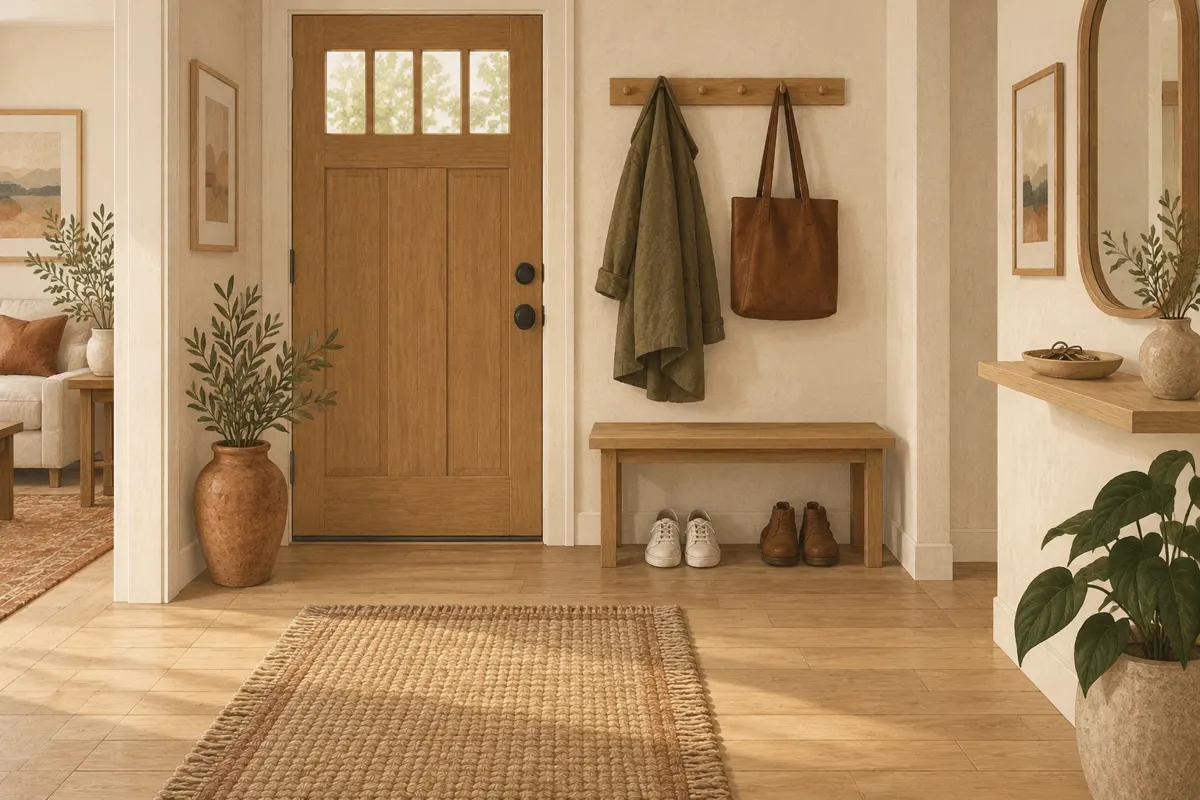
Organize an entryway without a coat closet by giving everyday shoes, coats, bags and keys a small, defined home near the door you use most. Start with furniture and containers you already own, add hanging storage where it fits, and keep occasional items elsewhere. The proposed setup below combines a compact landing spot, clear capacity limits and a five-minute weekly reset.
Choose the spot around your daily route
Use the entrance your household actually comes through, even if it opens directly into a living room. Look for a short stretch of wall or an existing surface beside that route. Open the door fully and check that people can pass without stepping around shoes or brushing against hanging bags.
- Remove items that belong elsewhere, including spare footwear, old mail and out-of-season accessories.
- Gather what you use on an ordinary day: your current coat, daily shoes, bag and small essentials.
- Choose a boundary for the landing spot, such as one shelf, the space beneath a bench or a single shoe tray.
Treat that boundary as a proposed storage limit. If everything cannot fit comfortably, reduce what stays by the door before adding another container.
Give existing furniture one clear job
A small table, low shelf or bench can anchor the entryway. A table provides a surface for keys; a bench offers seating and space beneath for shoes; a shelf can hold baskets for accessories. Separate pieces can work together, so a matching storage system is optional.
For a proposed setup using what you own, place a shallow dish on a narrow table and a shoe tray underneath. If you have a bench, keep its seat available for putting on shoes and use the space below for footwear. Avoid turning every flat surface into extra storage.
In a very tight entrance, a small wall shelf and hooks may fit better than floor-standing furniture. Check the space with coats and bags hanging in place: their bulk matters as much as the rack itself.
Set a capacity for shoes, coats and bags
Hooks provide accessible storage for coats and bags, while racks, cubbies and trays give shoes a defined place. Assigning hanging spots to household members makes it clear where belongings go. The following limits are editorial proposals; adjust them to your available space and daily routine.
- Shoes: start with one daily pair per person. Add a second only if it fits inside the designated area without stacking.
- Coats: keep the outerwear currently in use on assigned hooks. Move spare and seasonal coats to another storage spot.
- Bags: give each daily bag one hook or cubby. Empty shopping bags and occasional totes belong elsewhere.
- Accessories: use one small basket for current hats, gloves or scarves, with nothing spilling over its edge.
An over-the-door rack is another option when wall space is scarce. Check that the door still closes properly. For any hook or rack, follow its mounting instructions and stated load limit before hanging heavy bags.
Keep keys and papers from taking over
Give keys, wallets and sunglasses a consistent home in a shallow tray or divided drawer. Use a separate paper holder for incoming mail so envelopes do not cover the items you need when leaving.
A proposed rule is to keep only papers awaiting a specific next action at the entrance. Recycle unwanted mail when you bring it in, and move documents that need filing to their permanent home. Keep the key tray small enough that it cannot become a basket for unrelated objects.
Use a five-minute weekly reset
Try this proposed five-minute reset once a week, at a time you can remember. Its purpose is to restore the storage limits, rather than reorganize the entire entrance.
- Minute one: return stray belongings to the rooms where they belong.
- Minute two: remove extra shoes, coats and bags from the entryway.
- Minute three: sort the paper holder and empty unrelated items from the key tray.
- Minute four: shake out or wipe the shoe tray and clear loose dirt.
- Minute five: put daily essentials back in their assigned spots and check the walking path.
If the same item repeatedly lands on the floor, adjust its home. A bag may need a more reachable hook, or boots may need a taller space. Change the placement before increasing capacity.