Keep a small compost bin tidy between drop-offs
· Editorial team phoenixnewsdaily24.com
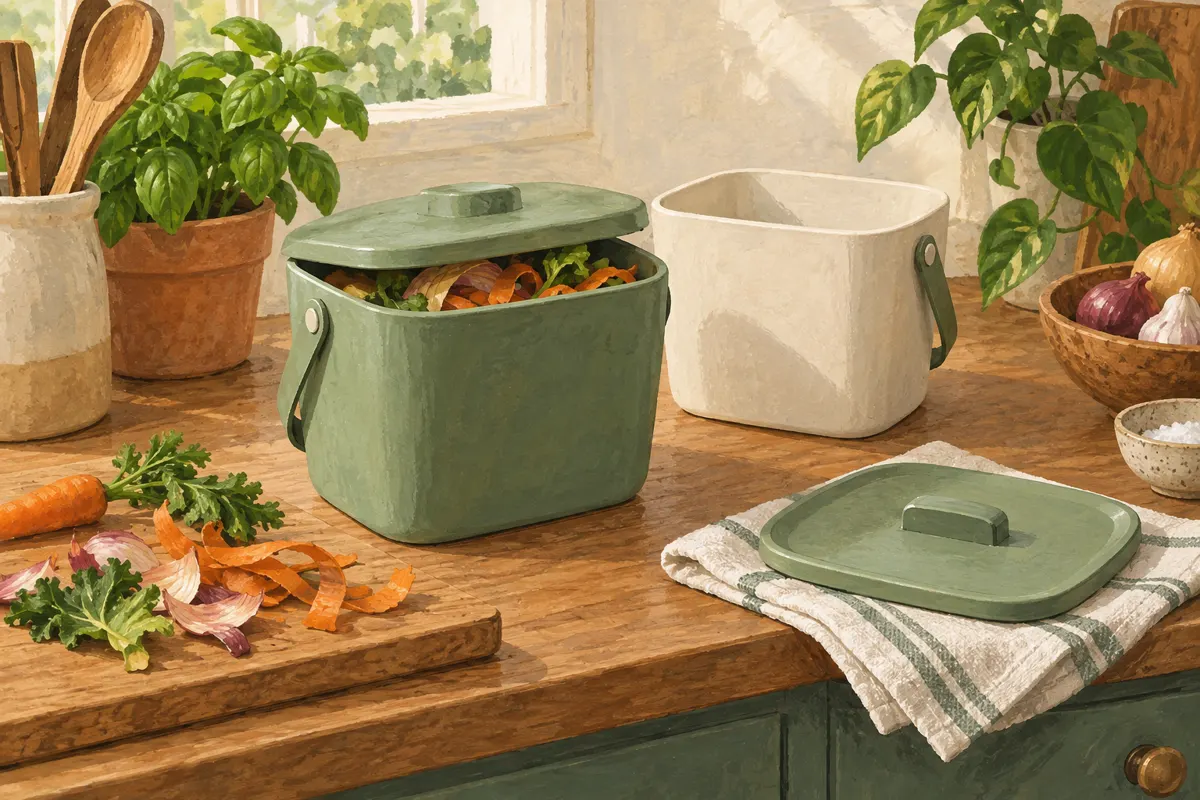
Keep food scraps in a washable, closed container, use the fridge or freezer to help prevent odors, and wash the container after each drop-off. Check your collection program’s accepted-materials list before adding scraps or liners. A small kitchen bin works best when you have a regular plan for emptying it.
Choose a container you can easily empty and wash
You can start with a reusable food storage container, a kitchen scraps caddy, or a reused plastic food container. Chicago’s drop-off guidance includes these options, while the EPA recommends a closed container for collecting kitchen scraps. You do not need a specialized appliance to get started.
Our suggested setup is a container with a wide opening, smooth interior, and lid that is easy to remove and clean. Choose a size you can carry comfortably when full and fit in your preferred storage spot. Before using something you already own, check that its lid closes properly and its inside is accessible for washing.
Check what belongs in your drop-off bin
A drop-off program’s rules can differ from backyard composting advice. Some commercial programs accept meat, fish, dairy, and cooked food; acceptance depends on the facility. The EPA advises checking first. Keep your program’s list handy so you can make the decision while preparing food, before an unwanted item disappears beneath other scraps.
- Which food scraps are accepted, including meat, bones, dairy, and leftovers.
- Whether paper filters, paper towels, or other nonfood materials are allowed.
- Whether liners are accepted, including bags labeled compostable.
- Whether you must empty scraps loose into the collection cart.
For example, Chicago’s program accepts food scraps but excludes all bags, including paper and certified compostable bags. Its guidance recommends collecting scraps directly in a container and washing it afterward. Follow your own program’s instructions rather than assuming a compostable label guarantees acceptance.
Keep wet scraps contained and use cold storage
Both sources identify the fridge or freezer as a place to store scraps. Chicago specifically recommends cold storage to help prevent odors, especially from leftovers, meat, fish, and dairy. If you have limited cold-storage space, our proposed routine is to use a small container during food preparation and transfer its contents to a closed container in the fridge or freezer afterward.
- Let excess liquid drain from solid scraps before putting them in the container.
- Keep soups, drinks, and other liquids out unless your program explicitly accepts them.
- Wipe drips from the rim and outside before closing the lid.
- Leave enough room for the lid to close without pressing scraps against it.
Avoid adding paper or cardboard simply to absorb moisture unless the program permits it. If odors become noticeable, move the scraps into cold storage or bring forward your next drop-off.
Plan an emptying routine before the bin fills
Chicago recommends roughly weekly drop-offs to minimize odors unless scraps are stored in the freezer. Use that as a starting point, then adjust to your household’s volume and the program’s access hours. Our suggested habit is to pair drop-off with an existing errand and check the container beforehand so it does not overflow while you wait.
If the kitchen container fills first, Chicago suggests transferring scraps into a larger lidded container and keeping it somewhere outdoor animals cannot access. For transport, our proposal is to keep the container upright in a washable tray or tub to contain accidental drips.
Wash and reset after every drop-off
Make cleaning part of the return trip: Chicago’s guidance says to wash the container when you get home. The following proposed routine keeps the job simple and leaves the bin ready for the next batch.
- Empty accepted scraps at the drop-off and handle any liner according to the program’s rules.
- At home, remove any remaining pieces from the container.
- Wash the container and lid, following the manufacturer’s care instructions.
- Pay attention to the rim, lid grooves, and any removable seal.
- Rinse and let the parts dry before reassembling the bin.
If a clean container still smells, our suggested next check is the lid and seal for trapped residue. Keeping a second washable container available can make the routine easier while the first one dries.